

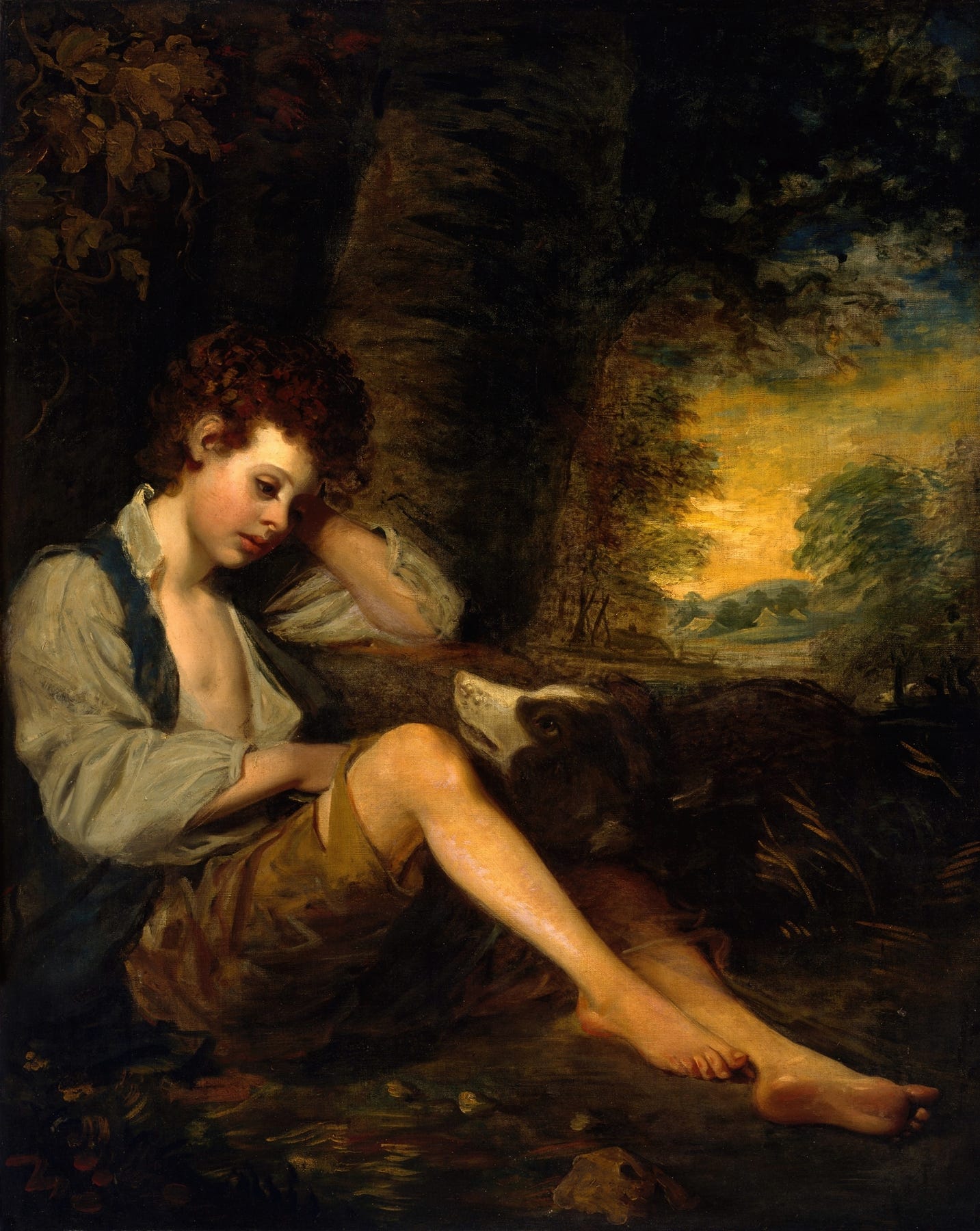
In the great hall of the Geats, a young man sits by the fire, keeping his distance from the warriors drinking together. His elders shake their heads in disappointment. They all thought this young man — a kid by the name of Beowulf — was hēan, that is, low, mean, insignificant. He wasn’t even welcome on the mead-bench.
Now, if you know anything about Beowulf's later life, this might sound strange. But if you haven’t read the poem, know that this is the same warrior who would later swim for days through monster-infested waters, fight the superhumanly strong monster Grendel with his bare hands, and face down a dragon in his final hours. How could Beowulf, of all people, have begun as a disappointment?
The answer can be found in an ancient storytelling motif called “the unpromising youth”.
From zero to hero
The “unpromising youth” motif, also known as the “Ash Lad” motif, appears across cultures and centuries. It involves a young man, by all accounts worthless, who transforms over the course of the story into a hero. In other words, the ugly duckling, but with more swords and fewer feathers.
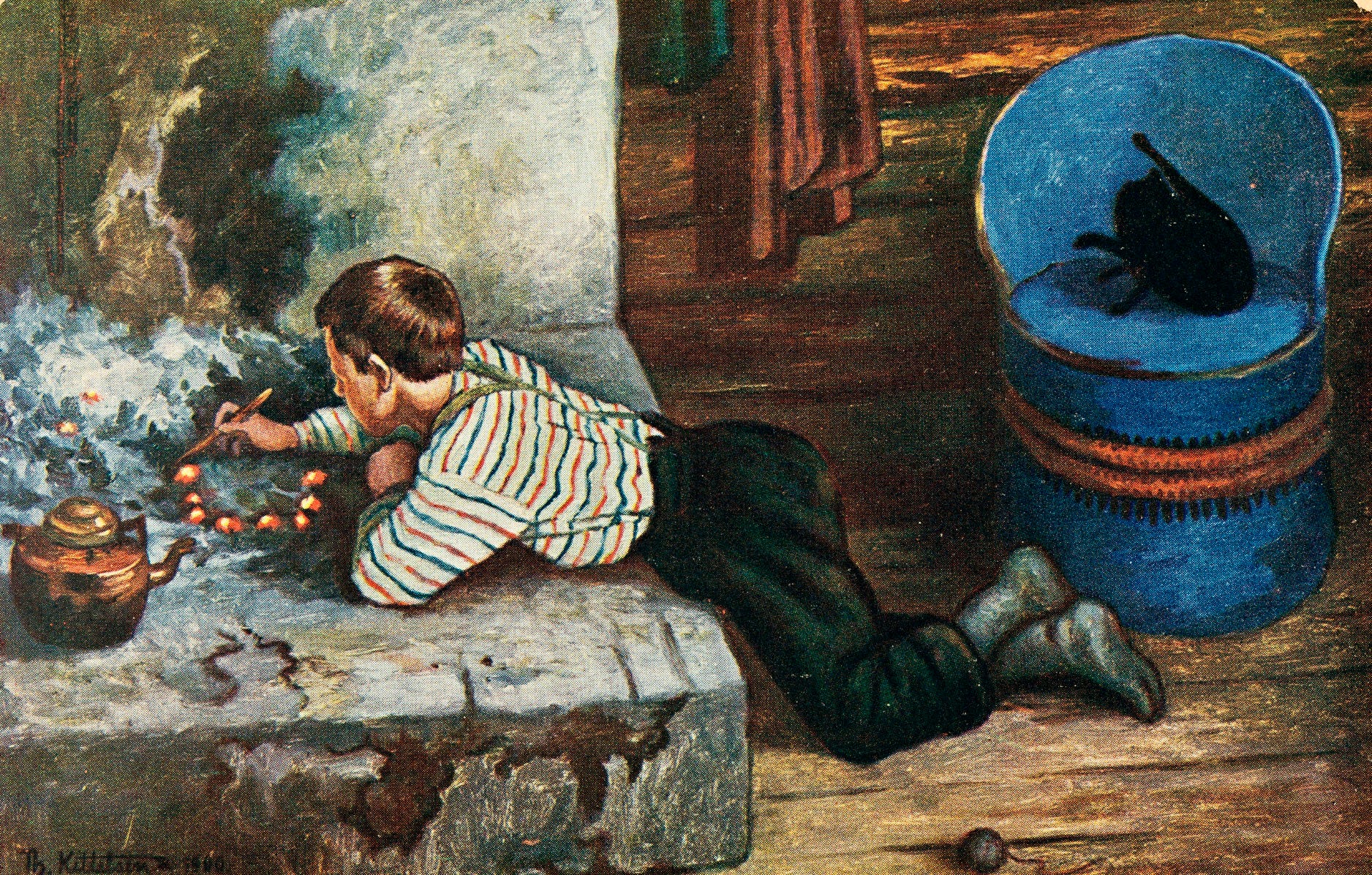
The term “Ash Lad” comes from Norwegian folklore's beloved character Askeladden (literally “the ash lad”), who appears in numerous tales as the youngest of three brothers — and the most looked down on. While his siblings are handsome, strong, and (supposedly) capable, Askeladden prefers to sit by the fireplace, poking at the embers and appearing to waste his days away.
In fairness to Askeladden, in some stories, it’s his family that forces him to sit amongst the ashes, like a male version of Cinderella — her story too is a variation on this theme.
Invariably, however, Askeladden later comes into his own, and does what his older brothers could not: he becomes the hero of the story, winning the hand of the princess as well as half the kingdom — or whatever other prize is on offer.
The Ash Lad motif crops up in folktales the world over. But why would the Beowulf poet, in particular, include this detail? After all, the premise of Beowulf as a story is “what if the strongest and most excellent guy of all time fought some monsters?” (Ok, it’s a bit more complicated than that, but go with me here…)
Edwenden, or why it has to be darkest before the dawn
But this apparent contradiction may serve a deeper purpose. The Beowulf poet — whoever that was — loved to use strong contrasts throughout the poem. The court of the Danes was healærna mǣst “the greatest of halls” — until it was ravaged by the monster Grendel and it became a bloodstained battleground.
The profaning of the Danish hall by Grendel is so much the worse because it had been such a happy place before. Similarly, the fact that Beowulf was unimpressive in his younger years makes his later achievements shine all the brighter.
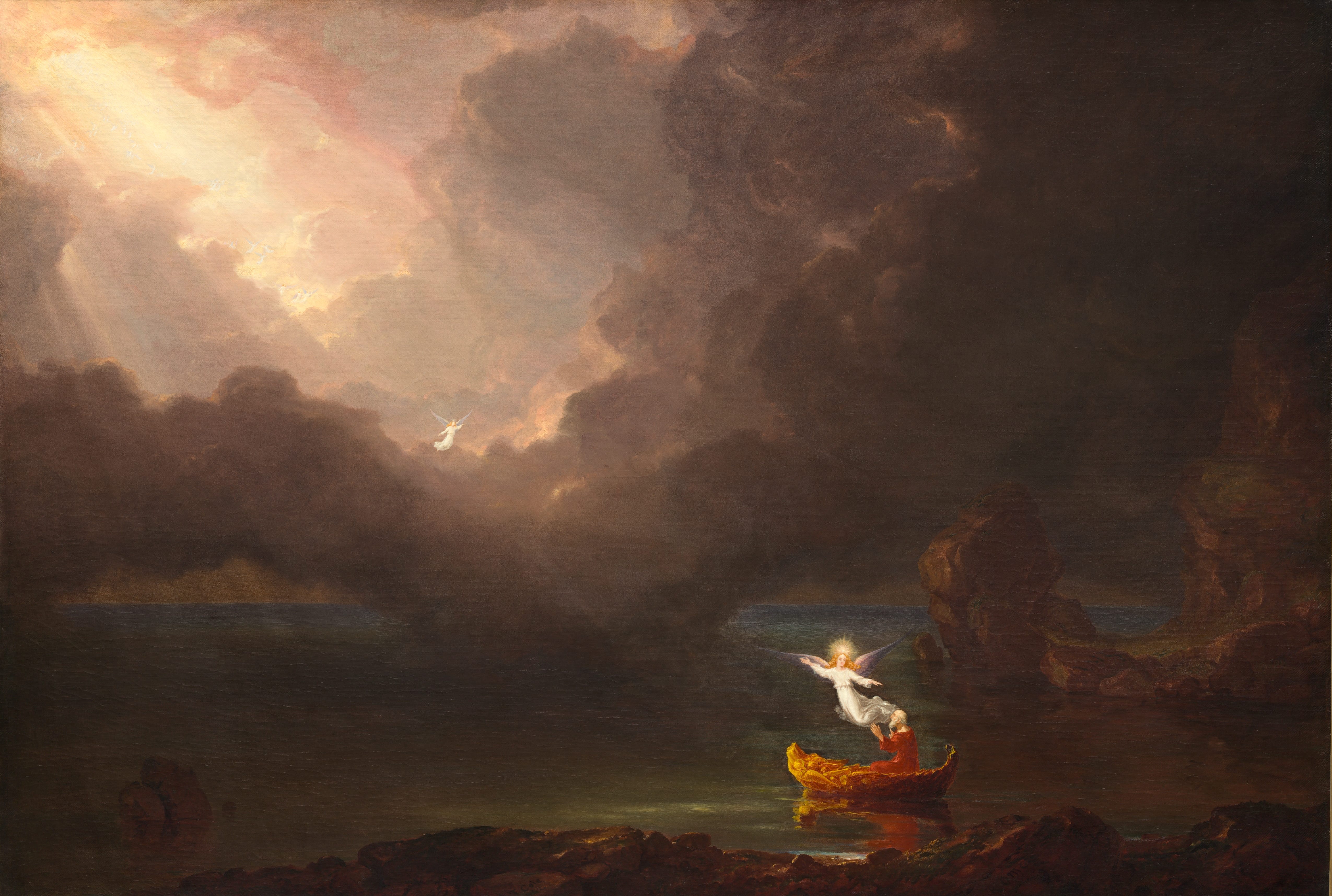
This contrast between how things once were and what they become leads us to another important theme in Beowulf, one expressed in a single Old English word: edwenden — the reversal of fortune.
This theme runs throughout Beowulf like a thread, reminding the reader that one’s fortunes can always change — for the worse, as when Grendel suddenly appeared on the Danes’s doorstep — or for the better, as when Beowulf arrived out of nowhere to slay Grendel. Beowulf’s humble beginnings and later rise to greatness are a perfect example of edwenden.
For the Brothers Grimm, this pattern represented something found in nature: dormant powers that slowly ripen along with the cycle of the year. Just as a seed lies hidden by the snow, or a bear waits out the winter in a cave, the greatness of a hero needs some time to become apparent.
Then one foggy Yule eve…
Whatever the reason it shows up in Beowulf, the motif of the unpromising youth has been a popular and enduring one. Children sing songs about it even today. Compare the following lines from Beowulf and Rudolph the Red-Nosed Reindeer:
Beowulf 2183b–2188a:
Hēan wæs lange,
swā hyne Ġēata bearn gōdne ne tealdon,
nē hyne on medobenċe micles wyrðne
dryhten Wedera ġedōn wolde;
swȳðe wēndon þæt hē slēac wǣre,
æðeling unfrom.
In translation:
For a long time he was lowly,
as the sons of the Geats didn’t consider him good,
nor did the King of the Geats want to treat him
as deserving much on the mead-bench;
really, they thought that he was lazy,
a feeble nobleman.
When I first read those lines, I thought immediately of these lines from Rudolph:
All of the other reindeer
Used to laugh and call him names
They never let poor Rudolph
Join in any reindeer games
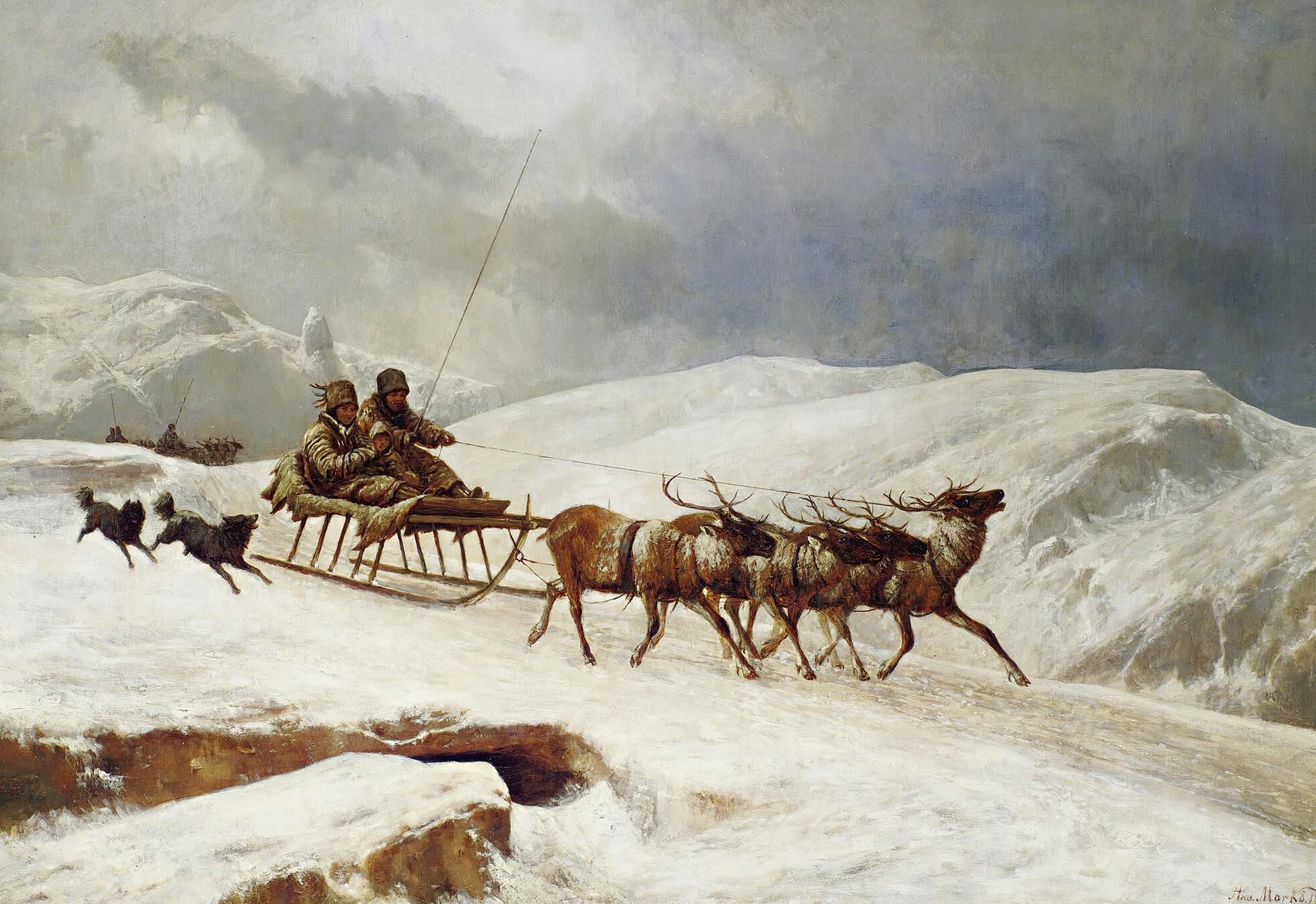
This parallel is particularly fun because Rudolph and Beowulf may even share one of the two components of their name — Beowulf is often analysed as Old English bēo ‘bee’ + wulf ‘wolf’ (well, that’s Jacob Grimm’s etymology — the etymology of first half of Beowulf’s name is a matter of debate, but that’s not the half that matters here). Rudolph, on the other hand, equates to Old English Hroþulf, that is hrōþ- ‘glory’ + wulf ‘wolf’.
Even more interesting, there’s a Hroþulf character in Beowulf! But he doesn’t have much of a role — he’s much more prominent in the Norse saga named after him, Hrólfs saga kraka ‘The saga of Hrólf Kraki’.
By the way — and somewhat sadly — there doesn’t appear to be any actual connection between the character of Rudolph and either Beowulf or Hroþulf / Hrólf Kraki, at least none that I was able to find.
Coincidences in nomenclature aside, the Rudolph parallel shows just how enduring the “unpromising youth” motif is. Seeing the same character go from despised to celebrated, or from weak to strong, just feels right to us.
In the end, we all have a taste for edwenden in storytelling — and we love nothing more than a “loser” who wins in the end.
The bible explicitly states that people mistakenly look at outward appearances and don't appreciate inner abilities. Samuel 1 16:7. When Samuel goes to find Saul's replacement, he is explicitly told:
But the LORD said to Samuel, “Pay no attention to his appearance or his stature, for I have rejected him. For not as man sees [does the LORD see]; man sees only what is visible, but the LORD sees into the heart.”
And after Jesse presents his first seven sons, Samuel needs to ask (Samuel 1 16:11)
Then Samuel asked Jesse, “Are these all the boys you have?” He replied, “There is still the youngest; he is tending the flock.” And Samuel said to Jesse, “Send someone to bring him, for we will not sit down to eat-b until he gets here.”
It still is amusing to me that OE uses "slēac" in much the way we use "slacker"