

Northern Burgundy, around 500 BC.
They buried her in a wooden chamber,. her body carefully laid to rest inside a wooden cart. The wheels had been removed, as befit a woman’s grave. Around her neck they placed a torc of gold, adorned with flying horses and lion’s paws. Fine things, yes, but they were nothing compared to what stood beside the wagon.
A bronze krater, a bowl for mixing wine and water, rose to the height of a man’s shoulder. It had taken six men to carry it down into the grave. It had come a long way to get there. Cast far to the south, decorated with the images of fantastical beasts, and hauled north in pieces along the wine roads to a country its makers had probably never heard of.
They closed the mound over all of it. Over her. She was only 35 years old.1
We have no idea what her name was, or even precisely what role she played in her society. But we know more about her world than you might think possible.
For example, we know, near enough, what language she spoke. And we know that one of its words made a journey even farther north than her bronze krater. It travelled, passing from lips to ears until it reached a foreign people, who adopted it as their own.
These new owners taught the word to their children, and they taught it to theirs, down through the generations, until you learned it from whoever taught you English.
The distant descendant of this word is the English word rich. But when it came into the language, English couldn’t rightly be called English. At that time, English was still centuries away.
Instead, it was in one of English’s distant ancestors that the word found a new home. Much about that time is a mystery to us: no one was writing yet, not in that ancestor of English or the language the word had come from.
We don’t even know what either language was called. We give them clumsy names beginning with Proto- as a signal that everything we know is reconstructed rather than recorded. English’s ancestor we call Proto-Germanic. The other language, the original source of the word rich, we call Proto-Celtic.
And yet, we can know more about that distant world than you might imagine.
You’re reading The Dead Language Society, where 64,000+ readers explore the hidden history of the English language. I’m Colin Gorrie: PhD linguist and your guide through 1,500 years of linguistic history.
I publish every Wednesday. Paid subscribers get every issue, the full archive, and my most in-depth work, including longer essays that trace the mysteries of English to their source, practical guides to reading historical texts yourself, and live book clubs where we read texts like Beowulf and Sir Gawain and the Green Knight.
We know that a linguistic transaction took place: the word that would become our word for rich passed into Proto-Germanic sometime in the 1st millennium BC, more likely in the middle than at the end.
We also know that it started out in Proto-Celtic or one of its descendants. And once we’ve retraced the shifts in meaning that rich has undergone through the ages, we can begin to understand the social dynamics that carried it across that language border.
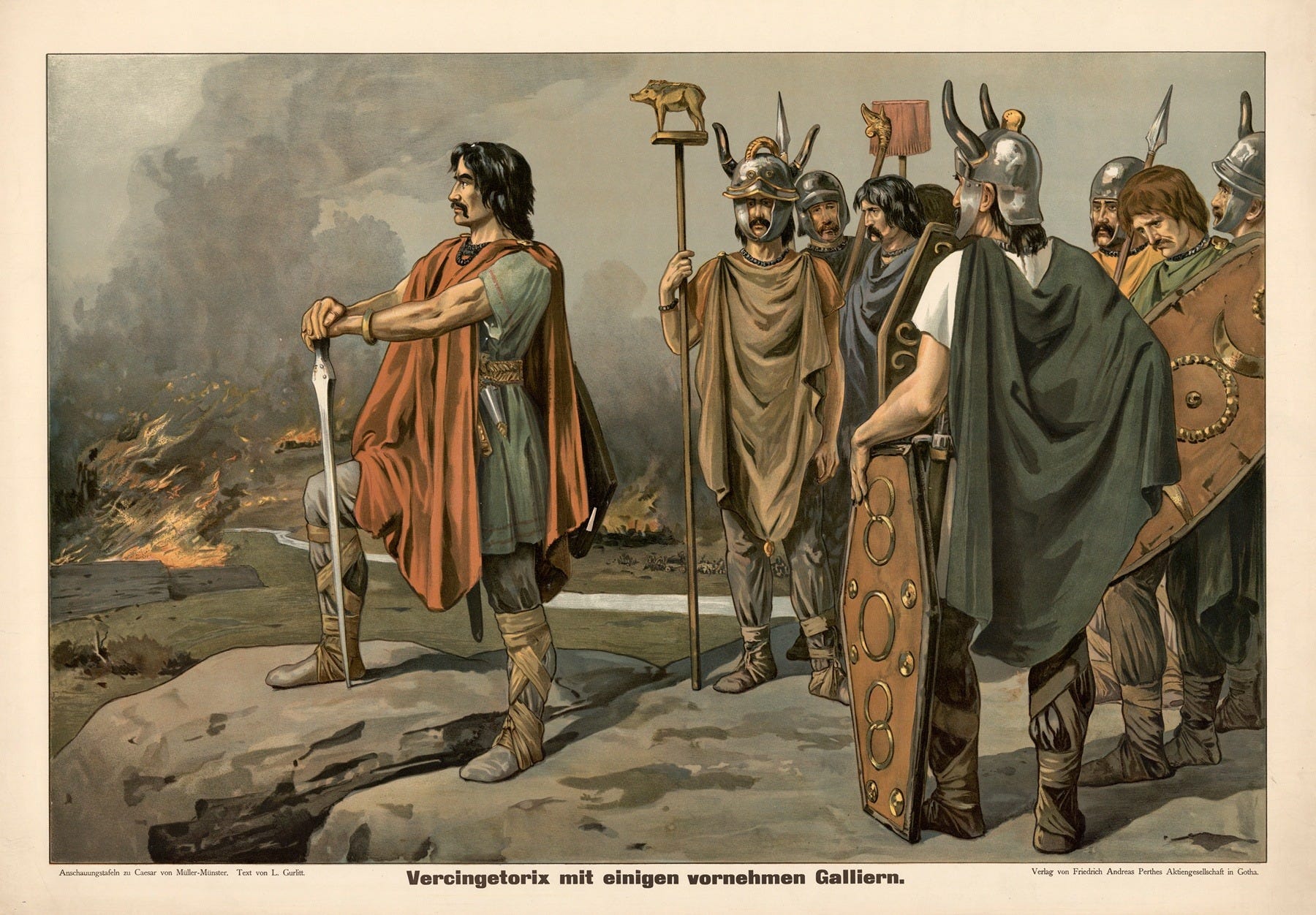
The Celts — and here I just mean ‘speakers of a Celtic language’ — were the ones with the prestige.
Reconstructing these circumstances in such detail seems impossible. And yet we can learn so much just by looking at rich alongside its relatives: What do the different words mean? What vowels do they have? What consonants?
These observations, along with the principles of historical linguistics, are enough to answer all the questions we might want to ask: where rich came from, when it entered the ancestor of English, and why.
The why is the most interesting part. It takes us back into a Celtic golden age, where a messenger sent by a king in Gaul could travel to Spain, Ireland, or even Turkey and meet people there who spoke more or less the same language he did.
